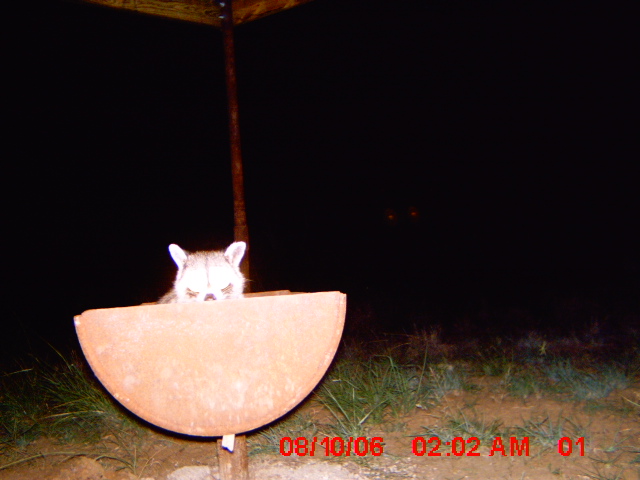

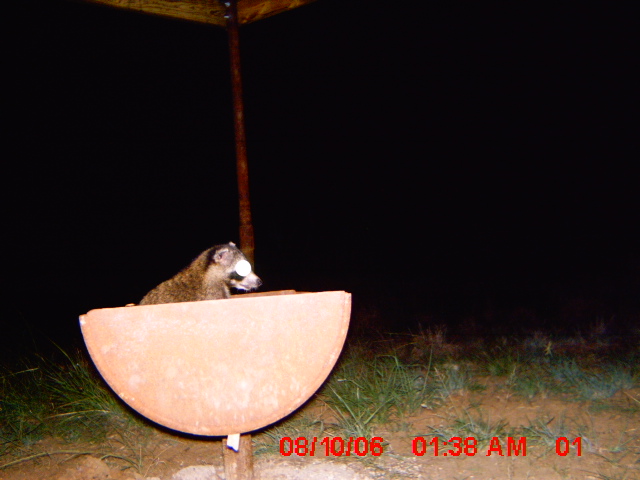
 Masked bandits of the night.
.jpg) Patricia and me sporting letter jackets. Patricia has on Victor's which was a big deal for dating couples then. The girl wore the guy's jacket so all of the other guys would know they were going "steady". Me, I'm wearing a jacket with "F" for Floresville which I got as playing on the winning Little League team that year. I was eleven then. The next year Poth had their first team when I was twelve. Poth won the area Little League Chanpionship that year when I was twelve. I got a jacket with a "P" for winning that year too. The teams we played were from neighboring towns, Stockdale, La Vernia, Floresville, and Nixon. I remember girls in Junior High thinking it was "hot stuff" to talk us in to letting them put it on. I guess they wanted to be like the older girls. I can remember all of us guys at that age being more interested in hunting, fishing, and all other things besides girls.
Patricia and me sporting letter jackets. Patricia has on Victor's which was a big deal for dating couples then. The girl wore the guy's jacket so all of the other guys would know they were going "steady". Me, I'm wearing a jacket with "F" for Floresville which I got as playing on the winning Little League team that year. I was eleven then. The next year Poth had their first team when I was twelve. Poth won the area Little League Chanpionship that year when I was twelve. I got a jacket with a "P" for winning that year too. The teams we played were from neighboring towns, Stockdale, La Vernia, Floresville, and Nixon. I remember girls in Junior High thinking it was "hot stuff" to talk us in to letting them put it on. I guess they wanted to be like the older girls. I can remember all of us guys at that age being more interested in hunting, fishing, and all other things besides girls.
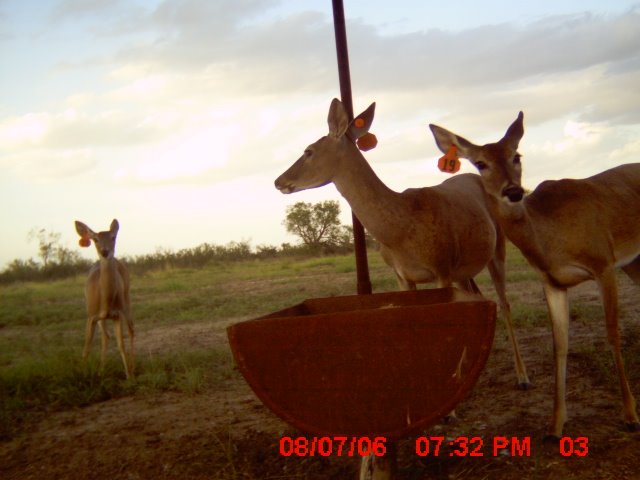 I installed an automatic camera on my trough feeder so that I can more easily keep tabs on the deer feeding there. It is neat because there is a date and time also recorded too. I change out cards so that I don't have to mount and remount the camera each time. It should be interesting.

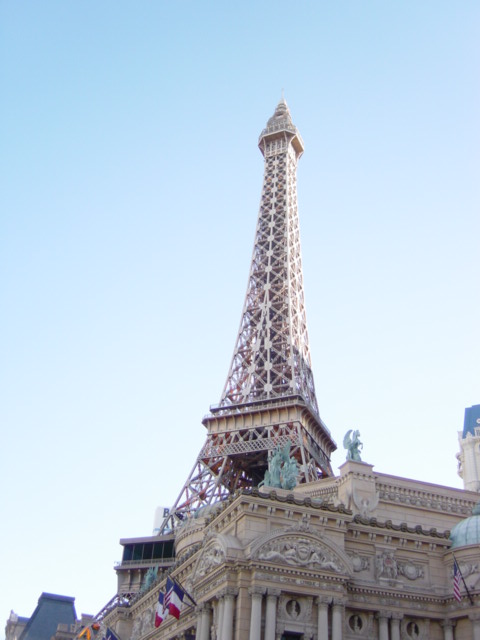
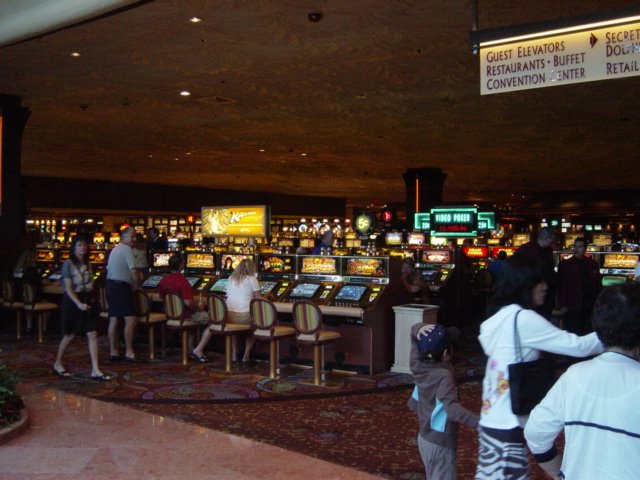

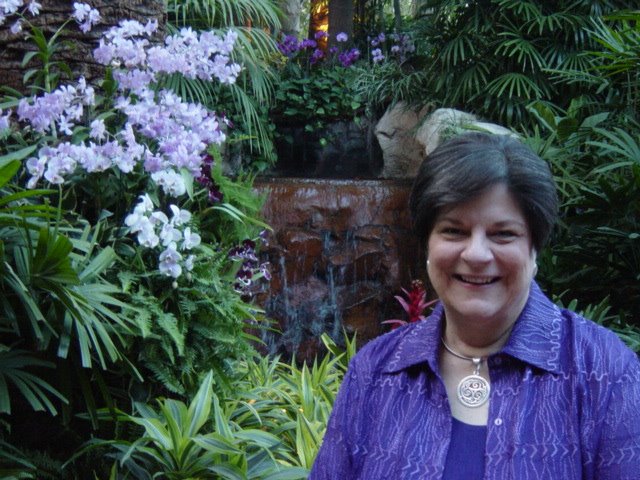 We took a quick trip to Las Vegas to celebrate Sandra's birthday. Remember, the secret is to keep a smile on your spouse's face for the rest of her life.
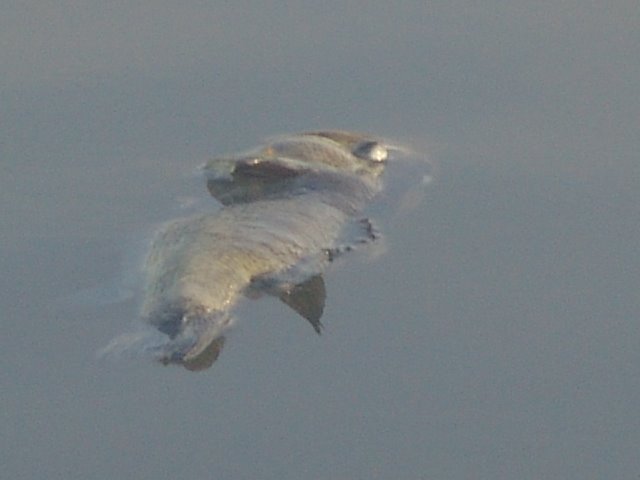 As I passed by one of the stock ponds this morning I noteced this bass floating on the surface. I'm not sure what happened to it. I could speculate on lots of reasons. It looked to me like it was about six or seven pounds.
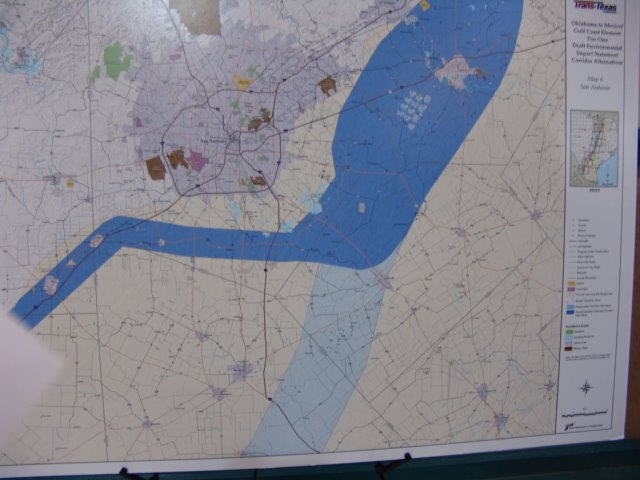 At the bottom of this map you can see where State HWY 541 intersects IH 37. If you move upward a short distance you can just detect County Road 427 as it leaves the Interstate. This is on the light blue or second choice plan. Lets all hope they go with the dark blue plan.
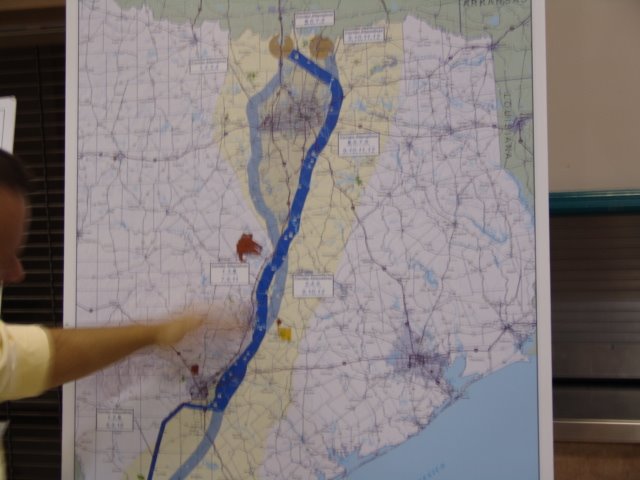 This is a map of the proposed highway and the alternate routes. Most of the blue shaded areas are ten miles wide. The actual route will be approximately one quarter mile wide...... that is 160 acres per mile of road. Think about that and it's effect on everyone in the path. Oh, and the state will own all of the gas stations, restaurants, and any other commercial interests along the way. I think the word is ..... upsetting!
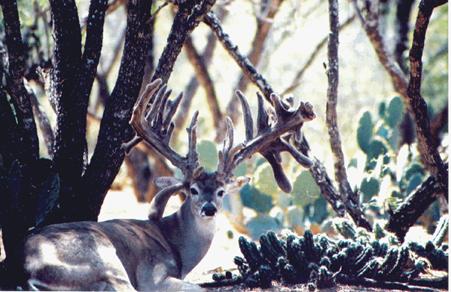
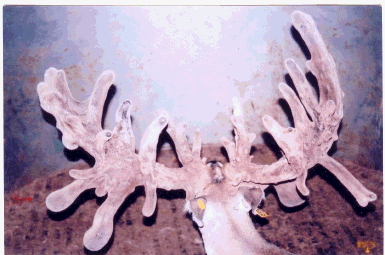
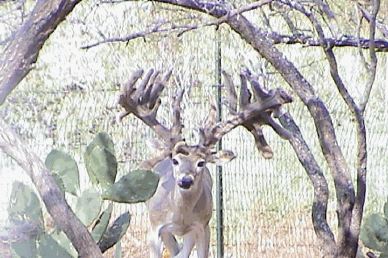
 I mentioned this deer in the next group of pictures so I went into my files and retrieved these for you to see what happens sometime if the right buck breeds the right doe.
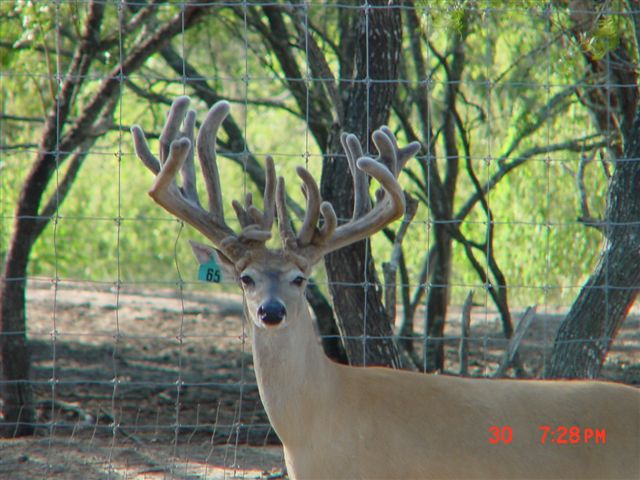
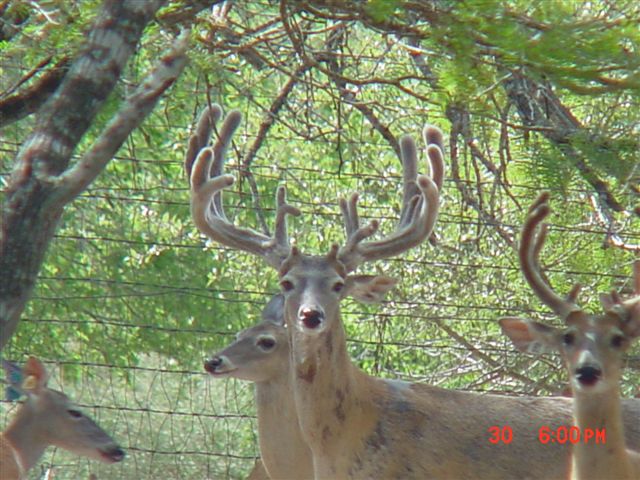
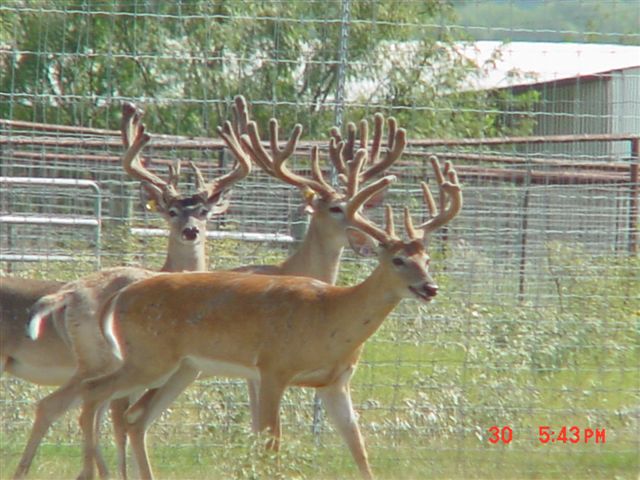
 Whitetail deer hunting is now big business in Texas. Many resourceful people are now doing a quick fix for improving genetics in deer herds. The pictures above are from John Moczygemba who I think was one of the first ones doing this. His and his family's interest started with a deer named "Paco" who was an unusually outstanding buck. From this start they have built a business that now is being copied by many others. The deer you see pictured above will be sold to other breeders, bought and turned out in large tracks of "high fenced" ranches, or kept by the Moczygembas to carry on their herd of deer. If you have any interest in owning one of these deer they are not giving them away. You had better have deep pockets. The highest price I have heard of was for another breeder's deer named "Dreambuck" who was sold for $450,000. This particular deer had approximately 300 inches of antler on the Boone and Crocket scoring system as a four and one half year old deer. The deer pictured above I'm guessing could be bought for under $10,000 depending one their bloodline.
Rancho San JoseAround the 1860s, when the López family lived in Mexico, Chico Reyna, a cousin of Antonio’s, made trips hauling wool from Cadereyta, Nuevo León, through General Bravo, Nuevo León, and on to Corpus Christi, Texas. On his way through, he stopped to rest and visit with Antonio in San Pedro. Chico hauled his wool in a cart train, or tren de carretas, consisting of three two-wheeled carts. A strong lead rope made of rawhide held the carts together as they traveled. Oxen pulled the carts, which had bowed wooden arches covered with canvas. The oxen were fed, watered, and rested for the night at Antonio’s ranch so they would be ready to go the next morning.On one of these trips, Francisco López, Antonio’s oldest son, joined his uncle for the trip, little realizing the adventure that awaited him. The experience proved unforgettable for Francisco because there were so many new places to see. He later described the trip to his son, Francisco Jr. He found the speed of travel very slow and boring but steady. The oxen would keep on going and going. Francisco would walk for a while and then ride on the carts for a while. Occasionally, Chico prodded the oxen with a fancy decorated stick, a garrocha. The cart trails were sandy in places and rocky in others, making a rough ride. Francisco observed that his uncle knew where to stop to rest, to eat, and to water the oxen at the lagoons and creeks alongside the trail.Along the way they passed through some isolated ranches. Most consisted of sillar houses with one or two jacales nearby. His uncle knew most of the people living at the ranches, and he stopped briefly to talk to them. All of the ranches had names and served as landmarks in the area. Years later Francisco drove along the road in a vehicle and remembered the sillar homes. When new roads bypassed the old homes, their names as landmarks were no longer known. A few of the houses can still be seen in ruins alongside the road from El Sauz to Rancho Randado. A few of the old ranches had two or three of these sillar homes. On the small ranches, the stock consisted mainly of sheep and goats, a few cattle, and one or two horses to pull the buggy and provide transportation.Francisco remembered the largest ranch was Rancho Randado, which had several of the sillar houses and many jacales.The jacales housed the working ranch hands known as peones.Francisco saw earthen dams called presas. The ranchers made the presas by blocking the water flow of a creek with a ridge of dirt, un bordo de tierra. In some of the presas, an excavation was dug into the side wall and the dirt was used to build a ledge, giving it more depth so it would hold more water and form a small lake to provide water for a longer time for the livestock.These large ranches had cattle pens of mesquite logs, corrales de leña.A few ranches today have preserved this type of corral. Another ranch that Francisco remembered very well was San Lorenzo. Later, though it’s not known why, the name of this ranch was changed to Las Latas. His uncle usually made a late sleep stop there. Francisco came to know the owners, Albino and Crisanto Vela, well. They were very friendly, and he developed a good relationship with them. At that time it was a very busy ranch, a landmark in the community. It included some sillar houses and many jacales. From the 1860s to about the 1920s, this ranch was a thriving community. There is nothing left of Las Latas today except a nearby cemetery with the names of the early pioneer families engraved on the tombstones. The cemetery is southeast of Alice on Highway 665.
.jpg)
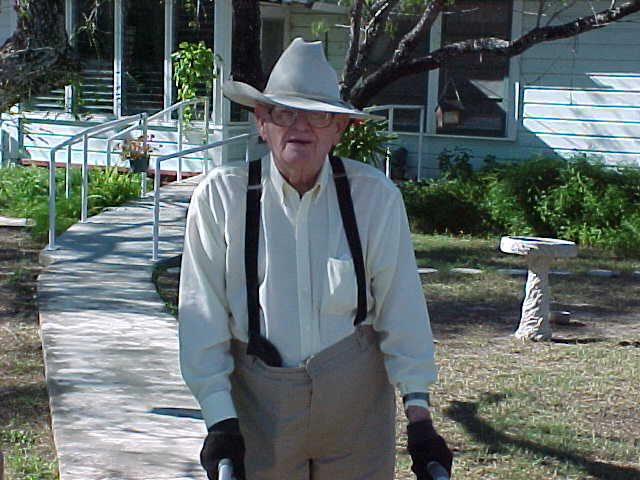 This was when we left Mr. "Cotton's" home on November 19, 2003 to go hunt hogs. Note the pistol stuffed in the right side of his pants. He has just earlier said when I asked, "Sure I can shoot one with my pistol". And he did....................
 I think these are Cloudless Sulphur buterflies that I caught near one of the ponds.
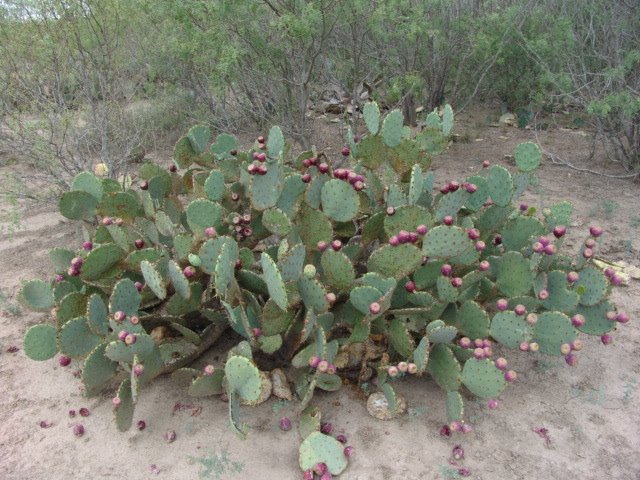 The pear apples are ripening and all sorts of animals are eating them.
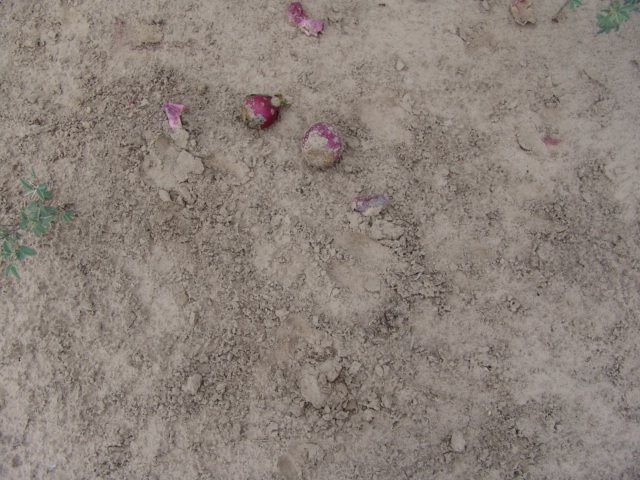 If you look closely enough you can see a feral hog track in the center of this picture with less obvious deer tracks.
 Pictures are two pieces of a "metate", a flat usually sandstone piece of rock, which native Indians used to grind seeds in preparation for making some of their foods. I stumbeled on these a couple of weeks ago while out feeding deer. This usually marks a camp where other artifacts can be found. Lex and I have spent countless hours searching these sites for artifacts and have found some nice pieces. We started when we lived at the ranch and I then felt it would help teach him to look at where he stepped and avoid getting snake bit. After finding these pieces I told Lex that I would wait until he came to the ranch to check this site more closely.
 I found this dead fawn this morning near one of the water ponds. I'm not sure what it died of. It could have been a number of things, coyotes, bobcats, fire ants, or probably a number of other causes. It was a little buck fawn.
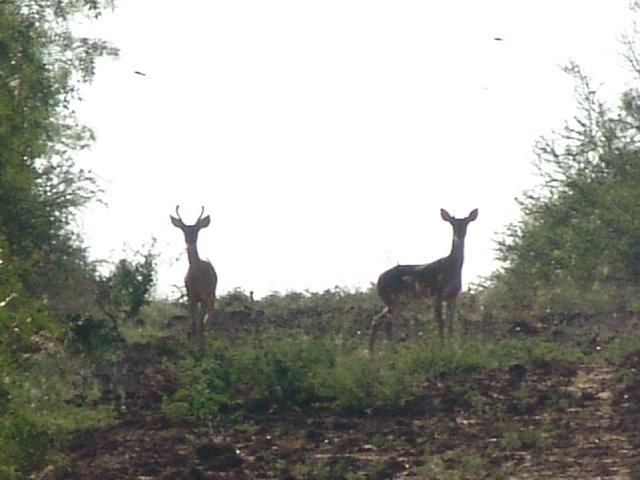 These two young bucks were checking me out this morning as I crossed this sendero. The one on the right barely has some knots on his head. Another one had just crossed headed to the right ahead of these two.

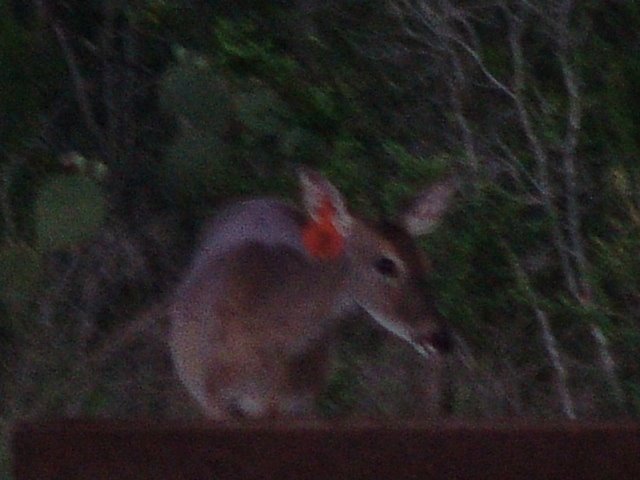 I was out late last evening checking on deer. This doe, #20, came in to feed at one of the troughs. It was late enough that the flash had to be supressed so as not to scare her off. The does are having their fawns now. This one looked like she was still had not given birth yet.
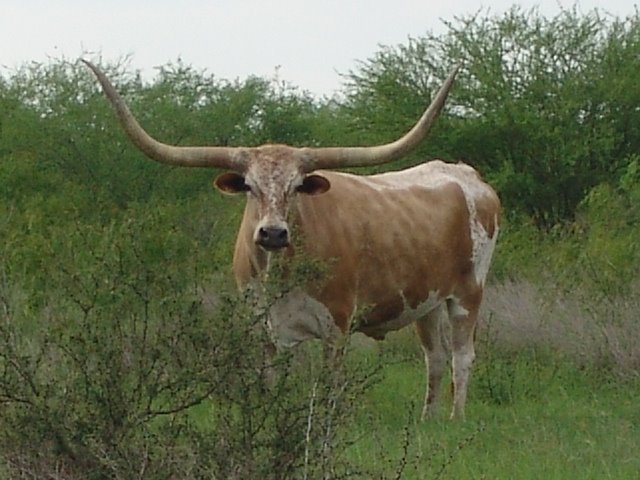
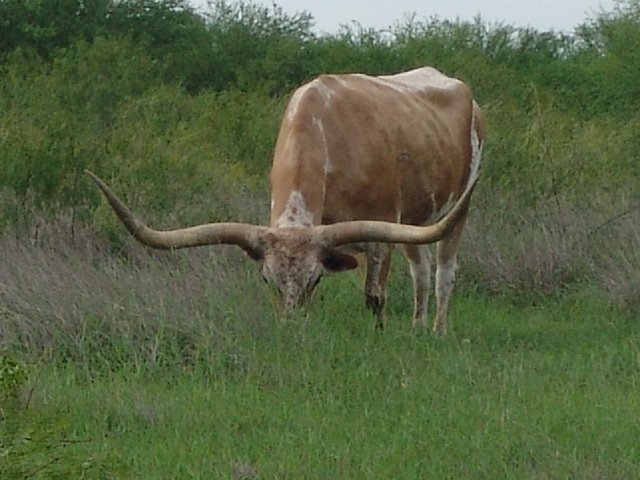 This longhorn steer belongs to Sam Syring. He would make a better looking mascot than the current "Bevo". I would approximate his horns are now about seven feet from tip to tip. He was grazing up close to the road yesterday so I took the opportunity to get a few pictures.
 This evening we met Doris at the "Store" for one last look. Doris has sold the store to a family that will open a Mexican Restaurant. Being inside the shell of what it used to be made us all think of what all went on during the days the store was open for business. It was fun remembering all the fun times and experiences we had while inside this building.